Blogs on Modern Education
Experiences of Teachers, Parents & Students
These blogs on modern education bring together unique perspectives from teachers, parents, and students navigating India’s evolving education system. Covering real-life experiences with the National Education Policy (NEP), digital learning, and classroom transformations, these personal stories reflect how education is changing across homes and schools.
These blogs on modern education bring together unique perspectives from teachers, parents, and students navigating India’s evolving education system. Covering real-life experiences with the National Education Policy (NEP), digital learning, and classroom transformations, these personal stories reflect how education is changing across homes and schools.
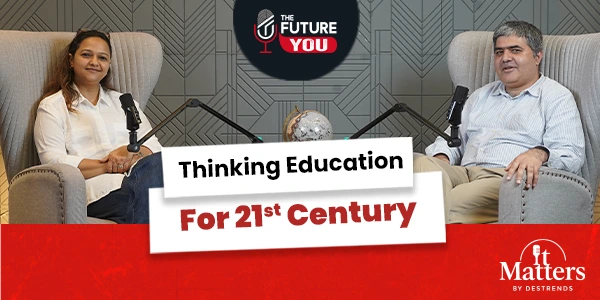
NEP 101: Reimagining India’s Learning Landscape
The National Education Policy (NEP) represents a transformative shift in India’s academic ethos redefining education as holistic, inclusive, and future-ready. NEP emphasizes multidisciplinary learning, digital-first pathways, and curricula that harmonize Indian philosophy with 21st-century skills. It calls for value-based schooling, enhanced university ranking & accreditation frameworks, and sustainable and ethical learning models that empower both learners and institutions. More than policy, NEP is a blueprint for reimagining India’s learning landscape where accessibility, innovation, and equity converge to cultivate global citizens rooted in local wisdom.
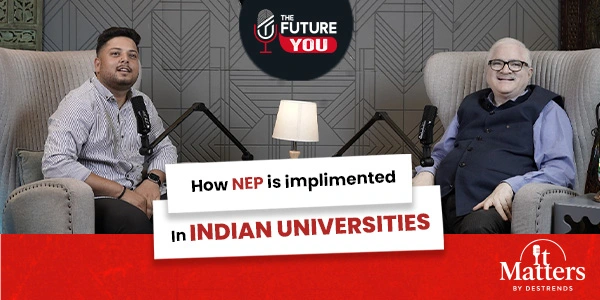
From Policy to Practice: Turning Vision into Action
Policies define vision, but practice breathes life into them. In education and beyond, the challenge lies not in drafting progressive frameworks like NEP 2020, but in ensuring their effective implementation. From classrooms adopting experiential pedagogy to universities embracing multidisciplinary flexibility and striving for university ranking & accreditation, success depends on translating intent into tangible outcomes. Bridging policy and practice requires collaboration among educators, institutions, policymakers, and communities. It demands student-centric teaching, alignment of resources, empowerment of stakeholders, and rigorous measurement of impact. True transformation is not authored in documents, it is realized in sustainable and ethical learning ecosystems where vision becomes reality.
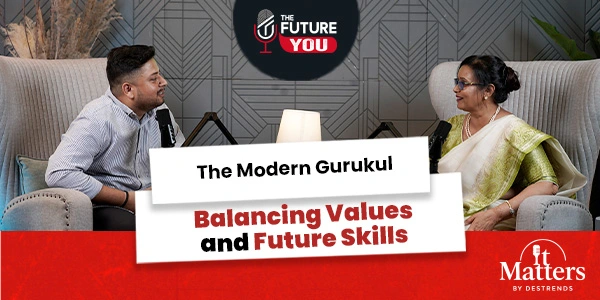
The Modern Gurukul: Balancing Values & Future Skills
Education must transcend rote delivery of knowledge; it must nurture character, ethics, and emotional intelligence while equipping learners with future-ready skills. The modern gurukul is not a regression into the past, but a reimagining of timeless values of discipline, empathy, and integrity. Alongside these foundations, students must master digital literacy, critical thinking, and innovation, ensuring real-world readiness in a global economy. This delicate synthesis of value-based schooling envisions individuals rooted in cultural ethos yet soaring with the capabilities to thrive in an evolving world of challenges and opportunities.
From Lamps to Learning – Explore How Education Evolves with It Matters
Every time diyas are lit at homes and lights sparkle on the roads, Diwali gently reminds us of something deeper — the victory of knowledge over ignorance. In this spirit, It Matters celebrates a higher truth of real illumination, beyond just lamps, into the act of learning that defines us as humans and aids in our becoming. The festival is here, and families sitting down on Diwali vacation; it is a perfect time to pause and reflect — what does the light of learning mean today?
Education That Matters: From Classrooms to Real-World Readiness
True education transcends textbooks and examinations; it prepares learners for life itself. In a rapidly evolving world, the demand is not for degrees alone, but for adaptable, problem-solving minds. Education that matters bridges classrooms with the real world, uniting theory with practice, knowledge with skills, and learning with doing. Through experiential learning, internships, entrepreneurship pathways, and digital literacy, students are equipped to be truly future-ready. The ultimate measure of education is not inscribed in marksheets, but embedded in mindsets fostering individuals who can innovate, collaborate, and thrive within a 21st-century learning model that is both student-centric and transformative.
Making Education Truly Accessible
Education is a fundamental right, not a privilege yet formidable barriers of cost, geography, and inclusivity continue to impede many. To make education genuinely accessible, we must reimagine paradigms crafting equitably where every learner, irrespective of circumstance, can flourish. This demands affordable frameworks, digital-first solutions for remote communities, and inclusive curricula that celebrate diversity in all its dimensions. True accessibility also necessitates empathy recognizing the mosaic of learner needs, from linguistic nuances to cognitive styles. When accessibility transcends rhetoric into reality, education metamorphoses into a 21st-century learning model liberating potential, dismantling hierarchies, and cultivating a society where opportunity is not hoarded, but harmoniously shared through sustainable and ethical learning.
The New Era of Purposeful Education
India is experiencing a radical change in its educational system as the classrooms are now the centers of creativity and discovery. The main emphasis is on the skills of imagination, teamwork, and problem-solving rather than on many students’ regular killing of time through cramming and going through books. The students are slowly beginning to understand that learning matters when it’s based on the concept of connecting knowledge with purpose. They’re not just studying to score high; they’re studying to grow, express, and create.
The Fee Factor: Rethinking Affordability in Higher Education
Escalating tuition fees have progressively transformed higher education from a right into a privilege, constraining access for countless deserving learners. The pressing challenge lies in balancing institutional sustainability with student affordability. As we prepare students for a 21st-century learning model and a global future, one must ask: is opportunity being curtailed by cost? Rethinking the fee factor necessitates bold innovation scholarships, flexible payment models, income-sharing agreements, and digital-first pathways. Education must not entrap learners in lifelong debt but unlock sustainable and ethical learning opportunities, ensuring that it is talent—not financial background—that determines who flourishes in a truly inclusive, student-centric education system.
Education Policy Makers Speak: Shaping the Future of Learning
When education policy makers speak, they do more than announce reforms; they delineate the trajectory of generations. Their discourse reflects the aspiration of a holistic education system that is inclusive, innovative, and aligned with a 21st-century learning model. From reimagining curricula and embedding digital literacy, to advancing NEP-based higher education, their voice carries the profound responsibility of translating vision into tangible action. Yet, rhetoric must yield to implementation: enabling teachers, empowering institutions, and engaging communities. When policy makers speak with clarity and conviction, they do not merely shape policies they inspire trust, foster collaboration, and catalyze sustainable and ethical learning ecosystems that harmonize tradition with innovation.

Choosing the Right College: A Guide to Higher Education and Academic Success
The period of post-secondary education in an individual’s life can be seen as one of the top rankings in terms of significance. Thus, it is necessary that one studies at an appropriate college not only to receive an education, but also to form enduring links. This decision is going to determine your level of wisdom, impact, and circles of interaction, career prospects, or self-being. However, this decision is often made on the surface, like one would pick a book in a bookshop, based on rankings, what their friends coerced them into, or how close they are to the place, rather than taking thoughts and feelings seriously.
Science, Commerce or Arts — What’s Your Calling
The choice of the stream after 10th becomes one of the most difficult decisions faced by students along with parents. With new policy education opening more flexibility in subjects and course structures, learners today enjoy a greater freedom than ever before. Yet the dilemma remains: Should you go with Science, Commerce, or Arts? Each of the streams offers something different in terms of opportunities, and a path can be molded according to one's aspiration and job goals with proper guidance.

Compassion to Curriculum: Building Empowered Schools | ft. Karuna Yadav
Into It Matters Podcast with Ms. Kajal Thakuriya, an educator and academic innovator, informally conversing on the transformation of classrooms from routine instruction into areas of creativity, collaboration, and questioning. Her thoughts lead us to understand that the best of teachers nowadays are changemakers who flip lesson plans into experiences that mold future thinkers.
Beyond Chalk and Talk
Digital classrooms do not acknowledge floors, walls, or grades... Rather, they go by the teachers who work within them. The modern learning is based on how educators inspire and engage, and also bend this curriculum somewhat to their own rhythm. Contemporary education systems are quietly witnessing a revolution, where there is creativity in teaching rather than conformity, innovation meets empathy.
Future Finance Ft. Ashish Sangai: Building Trust, Access & Adaptation in India’s Fintech Revolution
In this episode of It Matters, Ashish Sangai, Co-Founder of Flitpay, shares how India’s fintech industry is evolving from regulatory uncertainty to real-world adoption. His perspective reframes compliance as a foundation for innovation — where vision meets values, and technology meets trust.
Future Finance: A New Age Science for Trust, Access, and Adaptation
The language of money is being rewritten — not in the banks or trading floors, but in digital ecosystems powered by purpose and people. Modern finance has become less about numbers and more about trust, access, and adaptability. This is where the real transformation begins: when regulation and innovation learn to coexist.
From Classrooms to Incubation: How NEP 2020 and Student Creativity Are Shaping Future Innovators
Education in India is entering a new era — one where the classroom is not just a space to learn, but a launchpad to build, experiment, and innovate. The It Matters Podcast explores how NEP 2020, student-led creativity, and digital innovation are transforming schools and universities into real-world incubators.
From Classrooms to Creation: How NEP 2020 Is Turning Students into Innovators
The future of education is no longer confined to walls, grades, or chalkboards — it’s powered by creativity, curiosity, and collaboration. In this episode of It Matters, we explore how NEP 2020, student-led innovation, and digital creativity are transforming traditional classrooms into living incubation centers for ideas.
Beyond Marks: The Emotional and Ethical Side of Modern Education
Education no longer purely implies grades, scores, and academic accomplishments; it is now about the holistic development of learners on the emotional, ethical, and creative dimensions. National Education Policy 2020 (NEP) admits that true education must complete the mind and heart together. NEP is a unique initiative toward focusing on holistic growth and an assurance that every child acquires empathy, moral reasoning, and emotional balance right alongside intelligence.
The New Learning Economy: How NEP 2020 Is Building India’s Future Workforce
The new education policy is changing the way learning occurs in India. Under the National Education Policy 2020 (NEP 2020), the education policy is aimed at creating an all-encompassing, multidisciplinary, and skill-based education system. This system tries to impart knowledge while stimulating curiosity, creativity, and confidence in students.
Learning 3.0: How AI and Multidisciplinary Education Are Shaping the Future of Careers
Reform in the education system constitutes a paradigm shift in India's view of learning, innovation, and employability. The policy states that the World of Work is changing faster than ever, at the very moment when AI, automation, and global collaboration are trying to redefine which skills need to be considered essential. The policy goes beyond reforms; it is a revolution where multidisciplinary learning, digital literacy, and flexible pathways are integrated into the academic structure.
The Startup Classroom: How Gen Z Students Are Becoming Founders Before Graduating
India's youthful entrepreneur, who is the quintessential Millennial, has been and still is the most innovative person and the least productive. While educational systems have kept up with the fast pace of change to an extent, the national education policy 2020 (NEP) has practically rewritten the rules of engagement. This has encouraged the introduction of creative struggles and entrepreneurship as career options among the Gen Z cohort, who are not waiting for degrees to set up businesses; rather, they are solving real-world problems even while in school.
Education Meets Influence: Why Content Creation Is the New Career Skill
In a world where digital is the primary and first platform, learning is no longer restricted to classrooms only, it happens on YouTube channels, podcasts, and social networks that are creative and even careers. The National Education Policy 2020 (NEP) acknowledges the change in the scenario and redefines education by mixing creativity, communication, and collaboration.
EPISODE 11 :Beyond the Hype: The Real Journey of Entrepreneurship Ft. Alok Trivedi
In a world that glorifies startup success stories, very few pause to acknowledge the sweat, uncertainty, and resilience it takes to build something from scratch. In this special episode of It Matters, entrepreneur Alok Trivedi brings a raw and unfiltered look into the emotional and strategic battles behind entrepreneurship. His story aligns closely with the vision of the national education policy 2020 — an education system that values practical learning, emotional intelligence, and an entrepreneurial mindset over rote academic success.
Beyond the Hype: How India’s New Education Vision Is Building Entrepreneurs, Not Employees
In today’s world, success is no longer defined by how well one memorizes concepts or scores in exams — it’s defined by creativity, adaptability, and emotional intelligence. The national education policy 2020 marks a powerful transformation in India’s learning system, one that prepares young people not merely to seek jobs but to create them. This shift represents a deeper change in how we perceive education — not as a destination, but as a lifelong journey of discovery, experimentation, and self-growth.
From Learners to Leaders: How India’s Education Revolution Is Powering a Generation of Innovators
India is witnessing a silent revolution in the way learning is perceived and practiced. The national education policy 2020 is not just another policy reform — it is a movement reshaping how knowledge is created, applied, and shared. It aims to prepare students not merely for examinations but for life itself — equipping them with the creativity, emotional intelligence, and resilience needed to thrive in a world driven by innovation.
Rethinking College Education: How India’s Universities Are Redefining the Future of Learning
The higher education system in India is witnessing an epoch-making change. The change in attitude towards college education, it was and still is a way to get jobs, now it is viewed as a breeding ground for new ideas, innovations, arts, and international connections. The alterations in the country’s education policy are serving as the wind in the sails of the institutions’ transition, where the institutions of yore are giving way to modern hubs that produce bright minds, researchers, and entrepreneurs.